The Rise of Circular Economy Models in Africa

Andy Akinbamini
Click to view profile
Africa stands at the threshold of an industrial revolution fundamentally different from the extractive, wasteful models that powered Western development centuries ago. The circular economy Africa embraces today represents an intentional departure from linear "take-make-dispose" systems that deplete natural resources whilst generating mountains of waste.
The momentum behind circular economy adoption reflects coordinated efforts by African governments, development institutions, businesses, and civil society, recognising that resource efficiency offers competitive advantages rather than burdensome constraints.
The African Circular Economy Alliance, comprising 21 African countries, leads continental efforts to embed circular principles into development strategies. At the same time, the African Development Bank's Africa Circular Economy Facility provides dedicated financing for policy development and business innovation.
Economic Opportunity Driving Circular Adoption
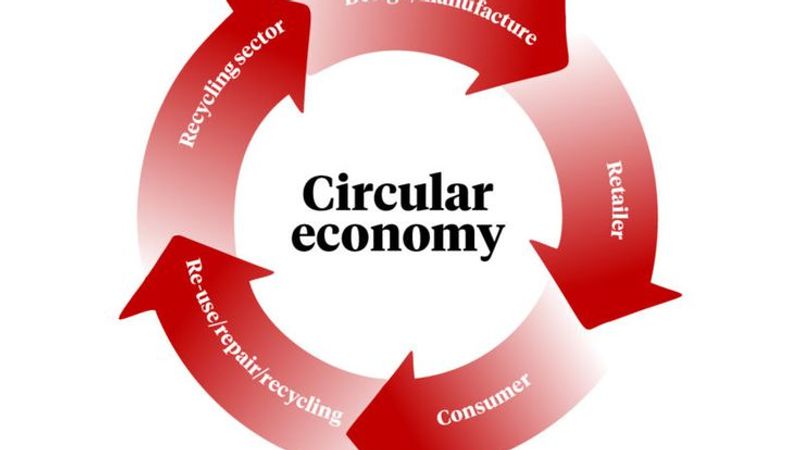
photo credit: Meg Dal-Ben
The financial case for adopting the circular economy in Africa has become impossible to ignore for serious policymakers and business leaders. According to the United Nations Environment Programme, the circular economy could create 11 million jobs in Africa and provide access to the $500 billion global circularity market, representing an extraordinary opportunity for a continent where youth unemployment remains persistently high.
Strategic investments and innovative policies could unlock a 2.2 percent increase in Africa's GDP whilst strengthening job creation and securing sustainable futures for millions currently trapped in poverty. These projections reflect the circular economy's potential to transform waste streams into revenue sources, extend product lifecycles, and create entirely new industries around repair, refurbishment, and resource recovery that barely exist today.
Policy Frameworks Supporting Sustainable Business Models
Government leadership proves essential for mainstreaming the circular economy in Africa through regulatory reforms, national roadmaps, and public investments, creating conducive business environments. In 2024, the Africa Circular Economy Facility launched National Circular Economy Roadmap projects in Benin, Cameroon, Chad, Ethiopia, and Uganda to achieve sustainable resource management while creating circular economy-friendly policies addressing waste management, product standards, and extended producer responsibility.
The African Union's Continental Circular Economy Action Plan for Africa 2024-2034 provides strategic direction for member states to develop tailored approaches that reflect their specific contexts, resource endowments, and development priorities.
These frameworks signal policy commitments that reduce investment risks while establishing clear rules enabling businesses to plan long-term circular strategies. According to the Circularity Gap Report 2024, the share of secondary materials entering the global economy declined from 9.1 percent in 2018 to 7.2 percent in 2023, demonstrating that despite the circular economy entering mainstream discourse, actual progress remains inadequate.
Practical Business Applications Demonstrating Viability
Sustainable business models span multiple sectors, including electronics, packaging, fashion, textiles, food systems, and the built environment, each offering distinct circular opportunities suited to different entrepreneurial capabilities and capital requirements. The AfriCircular Innovators Programme provides small and medium enterprises in Abidjan, Accra, and Kigali with mini-grants and capacity-building support, targeting pioneering ventures with potential to scale across African markets.
South Africa's Taking Care of Business generated R564 million in profits from waste over 15 years while recruiting 7,927 people through circular-economy training programmes, demonstrating that social impact and environmental sustainability create rather than constrain economic value. These enterprises succeed by identifying waste streams with residual value, developing processing capabilities that extract that value, and connecting outputs to markets willing to purchase circular products.
Technology and Innovation Enabling Circular Transformation
Digital platforms, financial technology, and knowledge-driven innovations accelerate circular economy adoption by addressing coordination challenges, transparency deficits, and financing gaps that historically constrained sustainable business. Mobile money platforms enable transactions between circular-economy businesses and customers in markets where formal banking remains inaccessible, with mobile money processing $1.68 trillion globally in 2024, with Africa accounting for 65 percent of that value.
Blockchain systems enhance supply chain transparency, allowing businesses to track material flows whilst providing credible evidence of circular practices to buyers, investors, and regulators demanding verified sustainability claims. Artificial intelligence optimises resource recovery by identifying patterns in waste generation, predicting equipment failures requiring repair, and matching surplus materials with potential users across fragmented markets.
Overcoming Barriers to Widespread Circular Adoption
Despite compelling opportunities, the circular economy in Africa faces persistent challenges that require coordinated solutions from governments, development partners, and private-sector actors. Infrastructure deficits constrain collection, sorting, processing, and distribution systems essential to circular business viability, particularly outside major urban centres, where waste volumes and transportation networks make operations uneconomical.
Financing gaps prevent entrepreneurs with viable circular concepts from accessing the capital needed for equipment, working capital, and market development, with traditional lenders viewing circular businesses as risky due to unfamiliarity rather than actual performance data. Technical capacity limitations mean many potential circular entrepreneurs lack knowledge of processing techniques, quality standards, and the business management required for sustainable operations, leaving them at a disadvantage compared to established linear alternatives.
Discover how circular-economy initiatives in Africa are creating 11 million jobs and unlocking $500 billion in opportunities through sustainable business practices across the continent.
Visit Our Website to learn more and explore Africa.