
The Digital Workforce: How Remote Work Is Changing Africa's Jobs

Andy Akinbamini
Click to view profile
The COVID-19 pandemic accelerated a transformation that was already quietly reshaping Africa's employment landscape. While the world scrambled to adapt to lockdowns and social distancing measures, African professionals discovered something remarkable. Geographical boundaries no longer dictated career possibilities. Remote work in Africa suddenly became more than a luxury reserved for tech elites.
It evolved into a genuine pathway for millions of talented individuals across the continent to access opportunities that were previously unimaginable. This shift represents not just a change in where people work, but a fundamental reimagining of what African employment can look like in the 21st century. The post-pandemic era has demonstrated that Africa's workforce is not only capable but also exceptionally competitive when equipped with the right tools and platforms.
The Post-Pandemic Transformation of African Employment

Photo Credit: Sara Schmitt/Pinterest
The pandemic forced a global experiment in remote work, and Africa emerged as one of the unexpected success stories of this transformation. Africa's freelance and remote workforce has grown by 55% since 2020, making it one of the fastest-growing regions globally for remote work adoption. What began as a necessity during lockdowns has evolved into a preferred working model for both employers and employees across the continent. Companies discovered that productivity did not require physical presence in traditional office spaces, while workers found they could balance professional responsibilities with personal commitments more effectively.
Infrastructure Challenges and Digital Employment Solutions

Photo Credit: Carpe Global/Pinterest
Remote work in Africa faces unique obstacles that distinguish it from similar movements in other regions, particularly in terms of electricity supply and internet connectivity. Electricity supply and internet connection were the top two challenges faced by remote and hybrid workers in Nigeria, reflecting broader infrastructure limitations across the continent. However, these challenges are spurring innovation rather than defeat. Solar-powered tech hubs are emerging in rural areas, while governments are investing in expanding broadband access to underserved regions.
The Rise of Freelance Platforms and Global Opportunities

Photo Credit: Wiki South Africa/Pinterest
Digital employment trends indicate that African professionals are increasingly using freelance platforms to connect with international clients. Africa's freelance tech market is projected to grow from $7.32 billion in 2024 to $37.71 billion by 2034, showing the economic potential of this sector. Platforms such as Upwork, Fiverr, and Andela have opened doors for African talent. The diversity of opportunities available is staggering, spanning software development, digital marketing, content creation, virtual assistance, and graphic design, as well as the continent.
Skills Development and the Future-Ready African Workforce
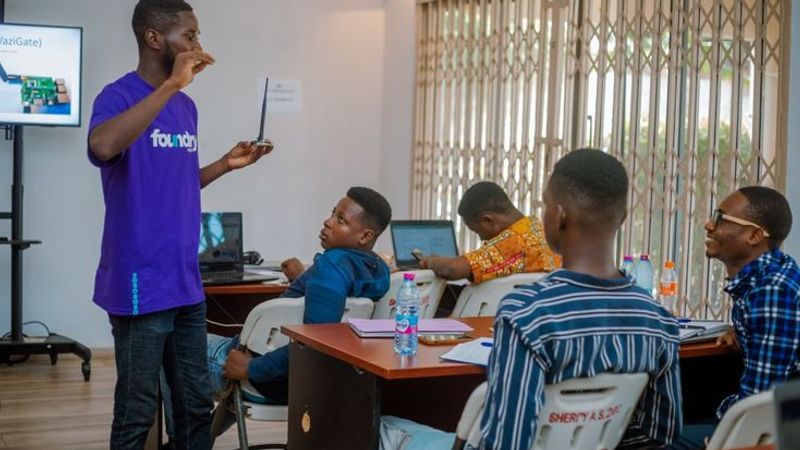
Photo Credit: Ameyaw Debrah Media/Pinterest
The shift towards remote work in Africa has created unprecedented demand for digital skills training and professional development across the continent. Africans are recognising that traditional education alone is insufficient for thriving in the digital economy, prompting massive investment in upskilling initiatives. Coding boot camps, online courses, and specialized training programs are equipping young Africans with expertise in artificial intelligence, data analysis, cloud computing, and digital marketing.
Building Sustainable Remote Work Ecosystems Across Africa
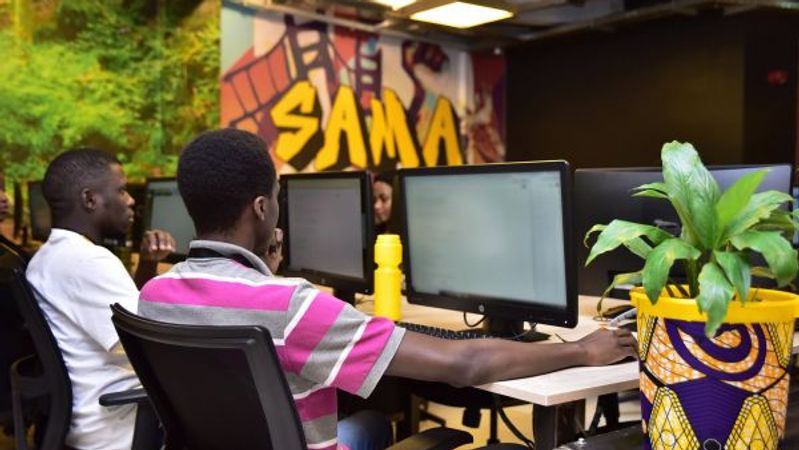
Photo Credit: Pinterest
Creating lasting change in remote work in Africa requires more than individual success stories. It demands comprehensive ecosystem development that supports digital employment at scale. Policy frameworks are evolving to accommodate the realities of remote work, with countries exploring digital nomad visas and updating tax regulations to reflect the growing prevalence of cross-border employment arrangements. Co-working spaces are proliferating in major cities, providing reliable internet and professional environments for freelancers and remote employees.
Discover how remote work in Africa is transforming employment across the continent. Explore digital employment trends, post-pandemic opportunities, and practical strategies for African professionals entering the global workforce.
Visit Our Website to learn more about and explore insights into Africa.