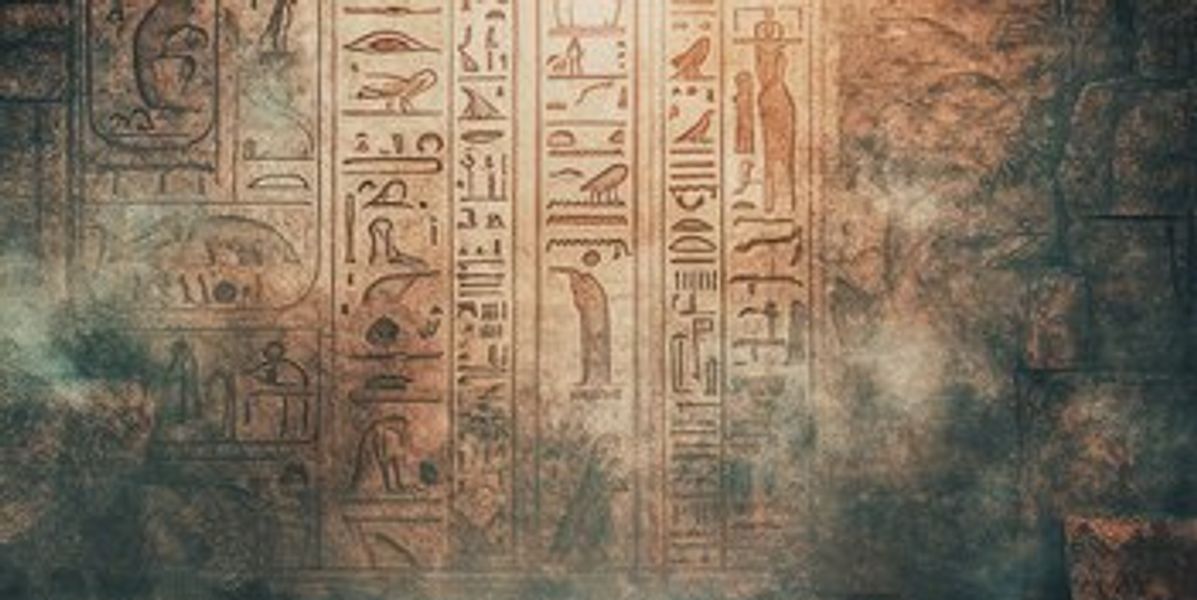
Sacred Scripts: The Languages That Built African Civilizations

Vera Ifechukwu
Click to view profile
Many Africans today feel a gap between themselves and the written legacies of their ancestors. They walk past ruins, gaze at relics, or encounter foreign scripts and begin to doubt that indigenous intellectual traditions ever thrived. Yet, deep within, there is a yearning, a desire to reconnect with the African scripts and civilizations that once lit the way for knowledge, law, religion, and art.
These ancient scripts remind us that writing was never distant from daily life but woven into governance, ritual, trade, and memory. They carried stories of empire, lineage, and cosmology, anchoring people to identity and purpose. To study them is to reclaim dignity, continuity, and pride in blood and soil. These are not dead relics of the past, but living voices waiting to be heard again.
Egyptian Hieroglyphics: The Birth Of Sacred Script
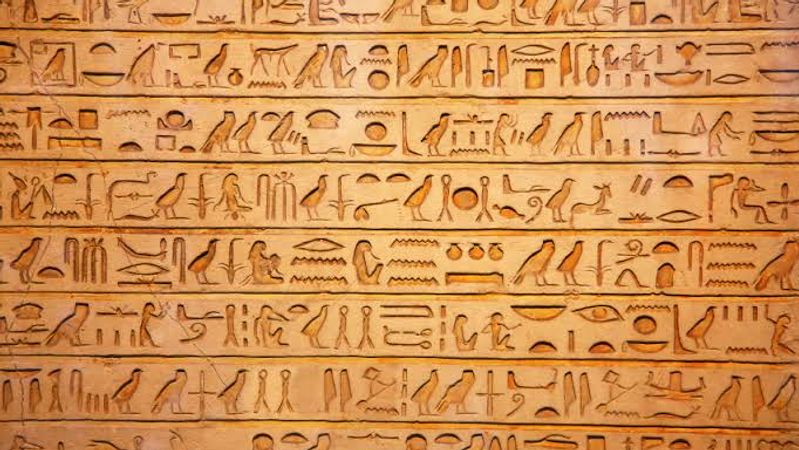
Photo Credit: Hosni bin Park/WikimediaCommons
Egyptian hieroglyphics represent one of the most iconic writing systems in human history. They combined pictorial and phonetic elements to record royal decrees, religious texts, myths and everyday documents. The script was sacred; scribes trained for years.
Hieroglyphics influenced nearby Africans and later Meroitic scripts. Many symbols carried double meanings: a bird could be a sound, a soul, a metaphor. Through them pharaohs claimed divine status. By studying them today we reconnect with early African civilization that understood that language and script build power, governance and identity.
Meroitic Script: The Kingdom Of Kush Speaks
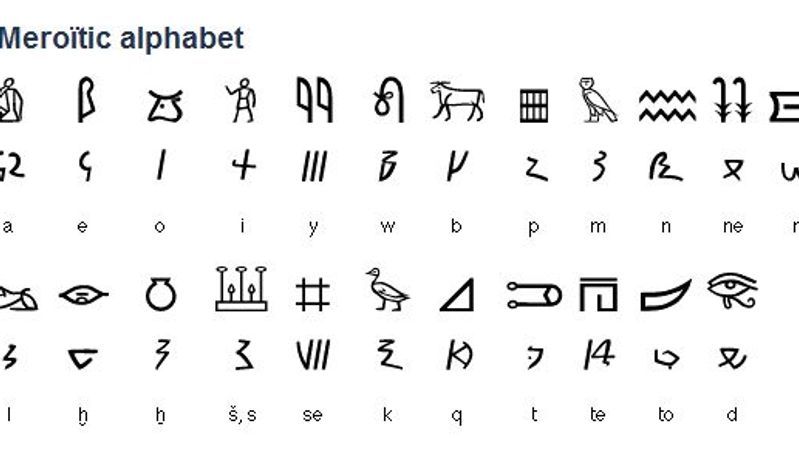
Photo Credit: Ana Paula/Pinterest
The Meroitic script arose around the 3rd century BC in the Kingdom of Kush, south of Egypt. It had two forms: Meroitic Cursive and Meroitic Hieroglyphs. The cursive was used widely for regular records; the hieroglyphs for royal or religious inscriptions. That script consisted of 23 signs: 15 consonants, 4 vowel signs and some syllabic signs.
Writing was right-to-left and sometimes vertical. The language remains partially undeciphered despite being deciphered in form over a century ago. Meroitic reveals that Kush had its own voice, its own bureaucrats, its own spiritual texts. To lose that story would be to chop away at the roots of African scripts and civilizations.
Ge’ez Script: The Liturgical Voice Of The Horn
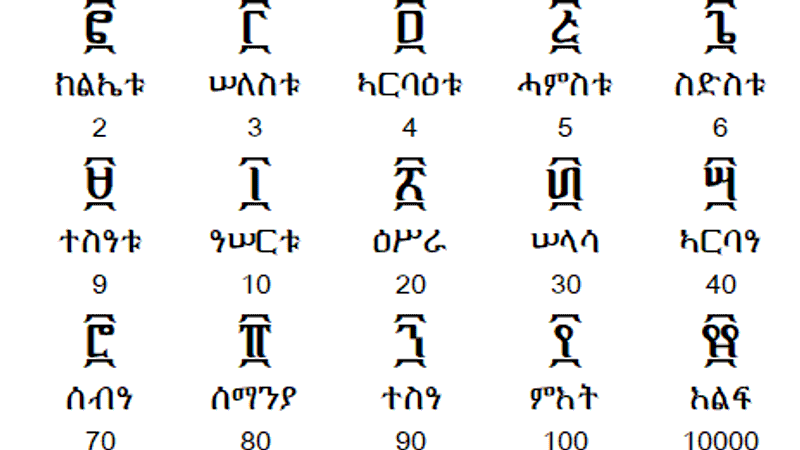
Photo Credit: Omniglot/Pinterest
The Ge’ez script, also known as Ethiopic, traces its lineage to Ancient South Arabian script. By the first centuries CE it evolved into an abjad, then into an abugida around the 4th century when vowels were developed. It remains the liturgical language of the Ethiopian and Eritrean Orthodox Churches. Ge’ez articulated court decrees, translations of philosophical works, manuscripts of history, law and science.
While Ge’ez ceased to be everyday speech, its script and literatures survive in religious, cultural, scholarly realms. Scholars and digitization projects are producing high-quality reproductions of Ge’ez manuscripts. They make texts accessible, preserving intellectual heritage for younger generations seeking reconnection.
Tifinagh And Berber Script: Desert Voices Carved In Stone
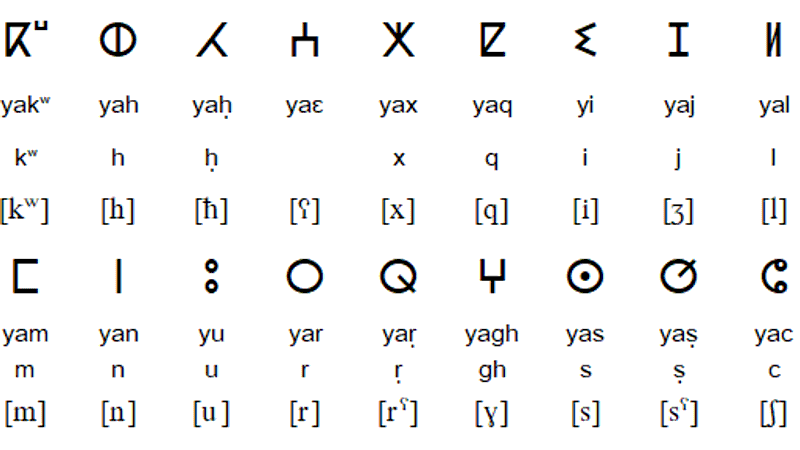
Photo Credit: Omniglot/Pinterest
Tifinagh, descended from the ancient Libyco-Berber alphabet, has roots in northern Africa among Berber (Amazigh) peoples. It has been used for centuries by Tuareg groups in the Sahara, carving symbols into rock, craft works, jewellery, and tattoos. Neo-Tifinagh has more recently been endorsed in Morocco and Algeria for writing Tamazight.
Official recognition is restoring pride and identity for Berber speaking communities long marginalised. It is a trend toward linguistic revival. Tifinagh shows that script need not be lost to time. When people demand reclaiming of language, when governments permit, cultural identity regains a visible script, a public sign: on road signs, in poetry, art, t-shirts.
Nsibidi: Symbols That Speak Secrets
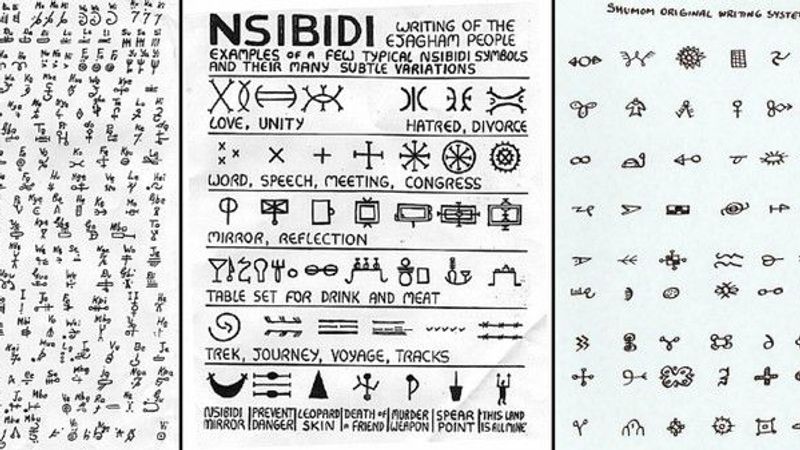
Photo Credit: Evelyn/Pinterest
Nsibidi is a pictographic / ideographic script from Southeastern Nigeria and Cameroon, invented by the Ejagham (Ekoi) people. It offers profound example of how African scripts and civilizations utilised non-alphabetic systems to mark identity, ethics, myth, spiritual belonging.
It is not alphabetic but symbol-based. Symbols represent ideas, proverbs, social status, love, war, justice. Some symbols are public; many remain secret among societies like Ekpe or Mbge. They appear on calabashes, cloth, tattooed on skin, carved on wood, used in architecture. Their meaning shifts depending on context, initiation status or gender.
Ajami Adaptations Of Arabic: Hybrid Scripts Of Dignity
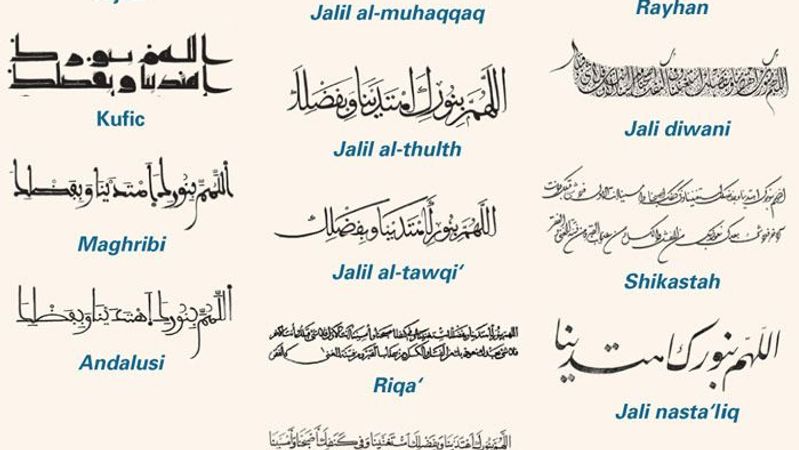
Photo Credit: Panda UX/Pinterest
Ajami refers to adapted Arabic script used to write African languages: Hausa, Wolof, Swahili, Fulani, and others. It has been in use since the 10th-16th centuries. These scripts were used in religious learning, poetry, histories, commercial communication.
Ajami shows identity affirmation: locals writing their own languages, thoughts, prayers. In spite of colonial suppression, Ajami persists in informal literacies, community memory and political assertion.
Practical Advice: Reconnection Through Learning And Preservation
If you wish to reconnect with African intellectual heritage through scripts, here are practical tips:
•Seek out local manuscripts or artefacts. Visit museums or heritage centres that exhibit original texts, inscriptions or carved symbols. Record digital photos.
•Support digitization initiatives. Contributions to libraries or archives that preserve Ge’ez, Ajami, Meroitic, Nsibidi help ensure scripts survive. Use or donate to projects that scan, transcribe or annotate these writings.
•Learn the scripts. There are online courses and academic programmes teaching Ge’ez, Tifinagh and Ajami. Even learning the basic signs of Nsibidi or symbols of Tifinagh restores personal connection.
•Promote teaching in schools. Advocate for curricula in your region to include history of local scripts. Inclusion fosters pride and awareness before scripts disappear from collective memory.
Visit Our Website:
Our Website Where heritage, education, and culture converge. Share this article with friends, teachers,and historians. Let us revive that sacred script legacy together.