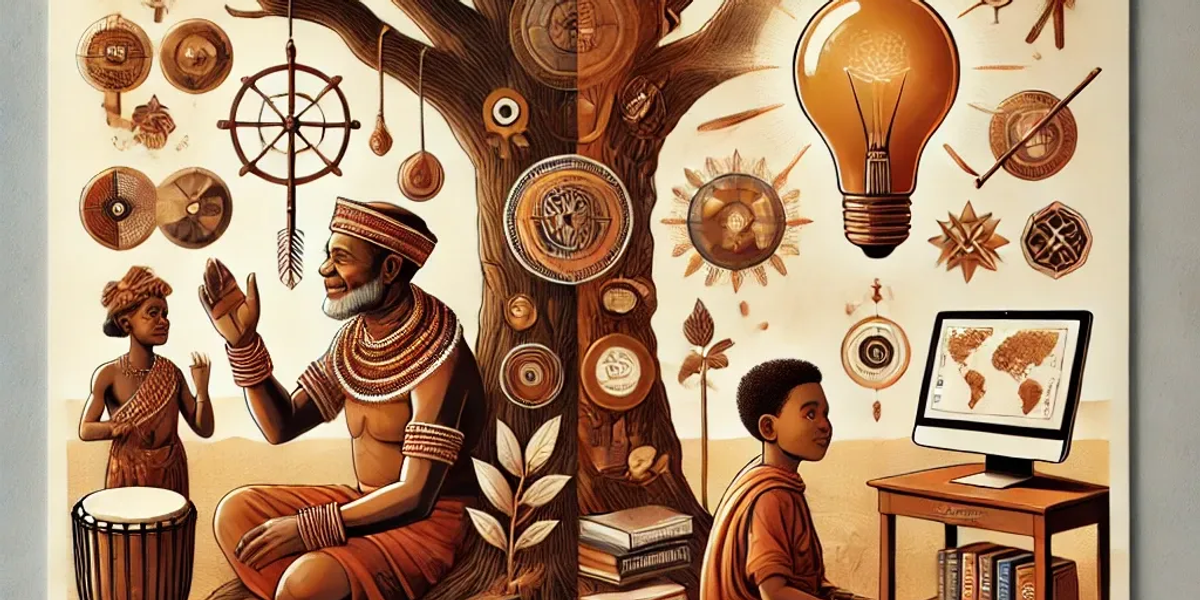
Exploring Africa's Rich Indigenous Knowledge Systems

Andy Akinbamini
Click to view profile
Africa's indigenous knowledge systems represent centuries of accumulated wisdom passed down through generations. These sophisticated frameworks encompass everything from agricultural practices and traditional medicine to environmental management and spiritual beliefs.
As the world grapples with climate change, healthcare challenges, and educational inequities, indigenous knowledge in Africa is emerging as a vital resource for sustainable solutions. The traditional wisdom Africa holds extends far beyond folklore and ancient customs. It represents a dynamic, evolving body of knowledge that continues to address contemporary challenges while preserving cultural identity
Transforming Education Through Cultural Integration
Academic institutions are increasingly recognising the value of indigenous knowledge systems in curriculum development. A recent 2025 study highlights how teachers in Ghana expressed strong positive beliefs about integrating African Indigenous Knowledge Systems into STEM education.
This shift acknowledges that Euro-Western knowledge systems have dominated curricula, leaving limited space for indigenous scientific and mathematical knowledge that could enhance student engagement and learning outcomes.
Revolutionising Healthcare With Ancestral Healing Practices
Traditional medicine remains the primary source of healthcare for millions across Africa. The World Health Organization reports that 80% of Africa's population relies on traditional medicine, particularly in rural areas where it often represents the only accessible and affordable option.
The launch of WHO's Global Traditional Medicine Strategy 2025-2034 marks a pivotal moment in elevating traditional wisdom in Africa within global health discourse and in promoting the integration of safe and effective practices into national health systems.
Providing Updates on Climate Adaptation Trends
Indigenous knowledge in Africa is proving essential for climate change adaptation across the continent. Farmers in northern Ghana employ rainwater harvesting and adjust planting times in response to shifting rainfall patterns, demonstrating how traditional practices address contemporary environmental challenges.
These methods, including crop diversification and organic pest management, have sustained communities for generations and now offer valuable alternatives to resource-intensive modern agricultural techniques.
Preserving Biodiversity Through Traditional Practices
Environmental conservation embedded within indigenous knowledge systems offers sustainable approaches to resource management. Communities across Africa treat natural resources as sacred, implementing cultural taboos and spiritual practices that restrict harmful activities near water sources and forests.
These spiritual and communal norms encourage collective ownership and strengthen sustainable management, demonstrating how traditional wisdom in Africa provides effective environmental stewardship without requiring complex technological interventions.
Bridging Ancient Wisdom With Modern Technology
Digital platforms and artificial intelligence are creating new opportunities to preserve and share indigenous knowledge. The 2025 eLearning Africa conference sparked debate about whether technology threatens or enhances indigenous knowledge systems.
The consensus favours responsible integration, with experts emphasising the importance of incorporating indigenous knowledge into technological design to ensure innovation works with culture rather than against it, creating a synergy that benefits both preservation and progress.
Addressing Contemporary Challenges Through Time-Tested Solutions
Indigenous knowledge in Africa continues to provide practical solutions for modern problems across multiple sectors. From water management systems that preserve quality through spiritual practices to traditional healing methods addressing mental and physical health holistically, these systems demonstrate adaptability.
The knowledge embedded in agricultural, fishing, and medicinal practices offers valuable insights for climate change adaptation, food security, and sustainable development, underscoring the enduring relevance of ancient wisdom in addressing contemporary global challenges.
Examine how indigenous knowledge and traditional wisdom in Africa are shaping modern education, healthcare, climate adaptation, and cultural preservation across the continent.
Visit our website for insights, creator stories, and trends shaping Africa.