
Africa 2025: Industries Set for Growth - A Startup Opportunity Guide

Andy Akinbamini
Click to view profile
Forget the old clichés about African startups. Something powerful is taking shape and it’s not about copying Silicon Valley. African entrepreneurs are rewriting the rules, creating solutions for billions of people who’ve been overlooked for far too long. Think of banking apps that work even if you don’t have a traditional bank account, or healthcare platforms that can spot diseases using nothing more than a smartphone camera.
The African business trends for 2025 point to a fundamental shift where startup opportunity Africa means creating businesses that actually work for African customers while generating returns that make international investors very happy.
Fintech Beyond Just Mobile Money

Photo credit: freepik
Did you think mobile money was the end of Africa’s fintech story? Think again. The real excitement is unfolding in embedded finance where everyday platforms are quietly turning into banks. From shopping apps that let you pay in installments, to supply chains offering instant credit, and even social media platforms doubling as financial hubs, banking is no longer a separate destination.
Climate Tech Taking The Lead

Photo credit: freepik
African climate tech start up pulled in $413.9 million by September 2024, making up a third of all startup funding on the continent. Climate technology has officially overtaken fintech as the hottest investment sector, and these aren't just feel-good projects anymore. Companies are building solar systems that actually work in rural areas, helping farmers use less water while growing more crops, and turning trash into energy that powers entire neighborhoods.
Healthcare Getting A Digital Makeover

Photo credit: freepik
The pandemic taught everyone about healthcare gaps, but African entrepreneurs saw opportunity. Healthtech startups are building telemedicine platforms that connect village patients with city doctors, AI tools that diagnose diseases using just a smartphone camera, and drone systems that deliver medicines faster than any traditional delivery service. What makes this special is how these companies work within Africa's constraints (limited internet, basic phones) while delivering healthcare that often beats what you'd get in supposedly advanced countries.
Property Tech Making Real Estate Simple

Photo credit: freepik
Real estate in Africa used to be all about who you knew and how much you could pay under the table. Proptech startups are changing that completely. Proptech accounted for 33% of investment volume in the first five months of 2025, with companies like Egypt's Nawy raising $75 million in May alone. Now you can buy, sell, or rent property through apps that show you everything upfront, get mortgages without knowing anyone at the bank, and even own fractions of expensive properties with small amounts of money.
Online Shopping Built For Africa
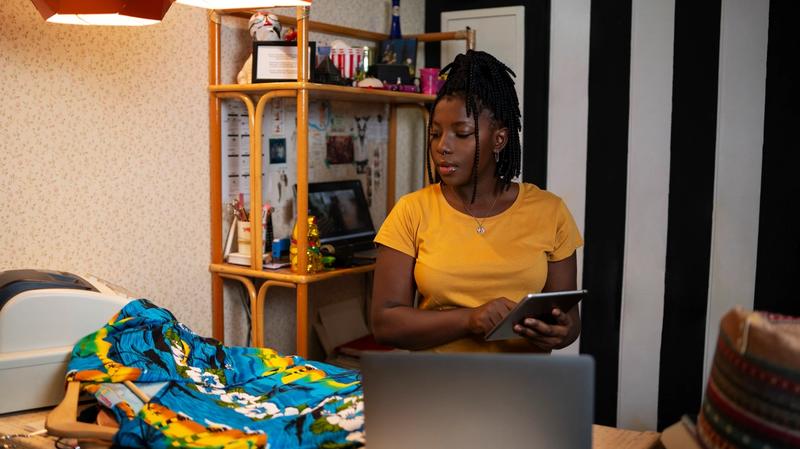
Photo credit: freepik
African e-commerce isn't trying to be Amazon, and that's exactly why it's working. The best platforms understand that people here prefer paying cash, love shopping through WhatsApp, and need products delivered to places that don't have street addresses. Companies are building everything from B2B platforms that help small shop owners stock their stores more cheaply to social commerce apps that turn every Facebook user into a potential salesperson.
Farming Gets High Tech

Photo credit: freepik
Agriculture feeds Africa, but it's also the sector that needs the most help. Agritech startups are building solutions that tell farmers exactly when to water their crops, connect them directly to buyers who pay fair prices, and use satellites to predict weather patterns that could affect harvests. The startup opportunity in African agritech is huge because the continent's population will double by 2050, and someone needs to figure out how to feed everyone.
Education Without Classrooms

Photo credit: freepik
Educational technology in Africa is solving a simple problem "how do you educate hundreds of millions of people who can't get to traditional schools?" The answer isn't just putting lectures on phones, it's creating entirely new ways to learn that work with spotty internet and busy schedules. Companies are building apps that teach kids in local languages, vocational platforms that connect learners directly with employers, and systems that give people real credentials for skills instead of just degrees.
To explore more Africa insights
Visit: Our Website